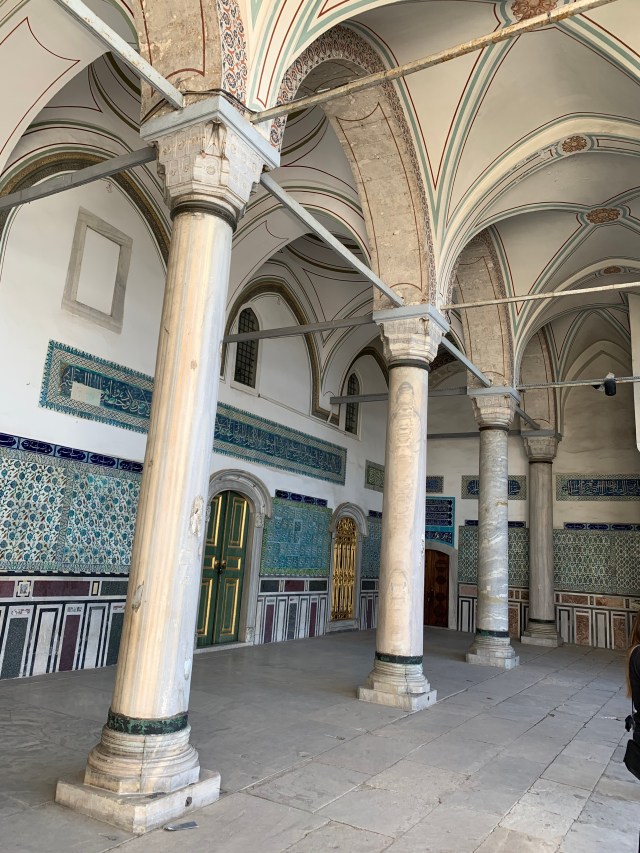
Interior, Topkapi
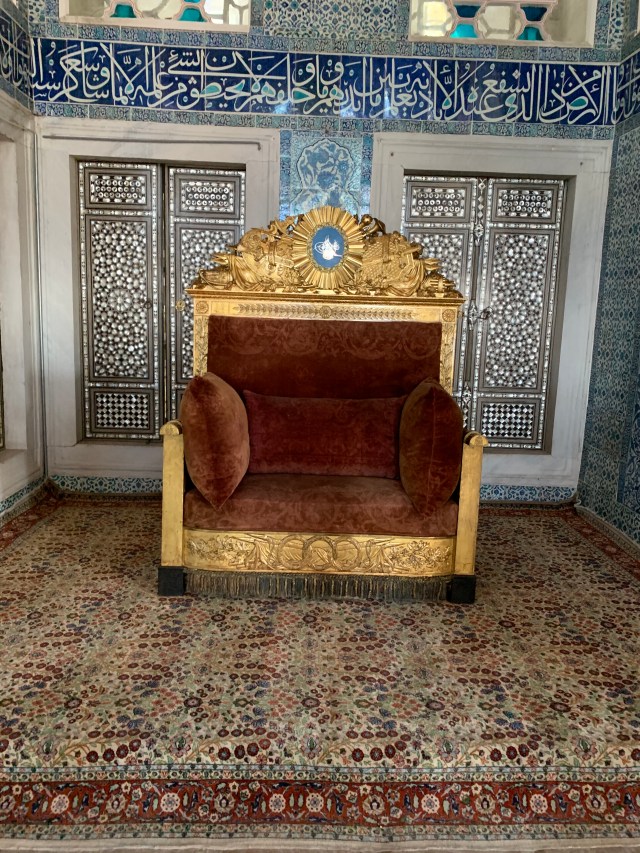
Sultan’s throne
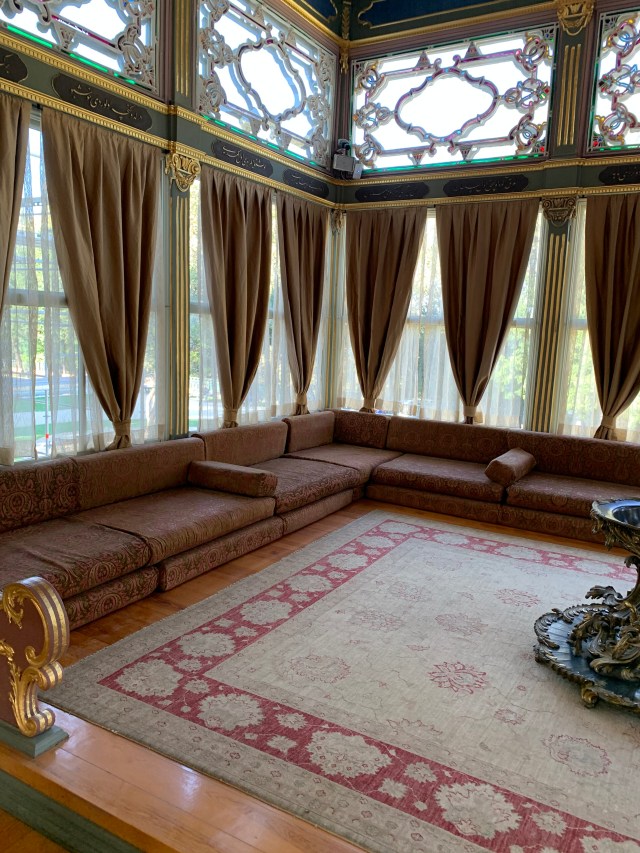
Sultan’s kiosk, or reception area
Library at Topkapi
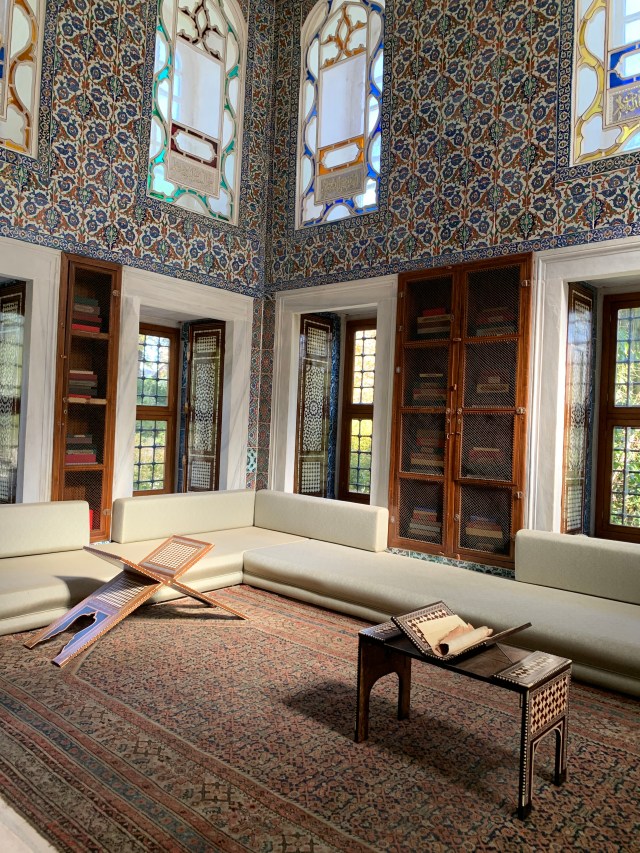
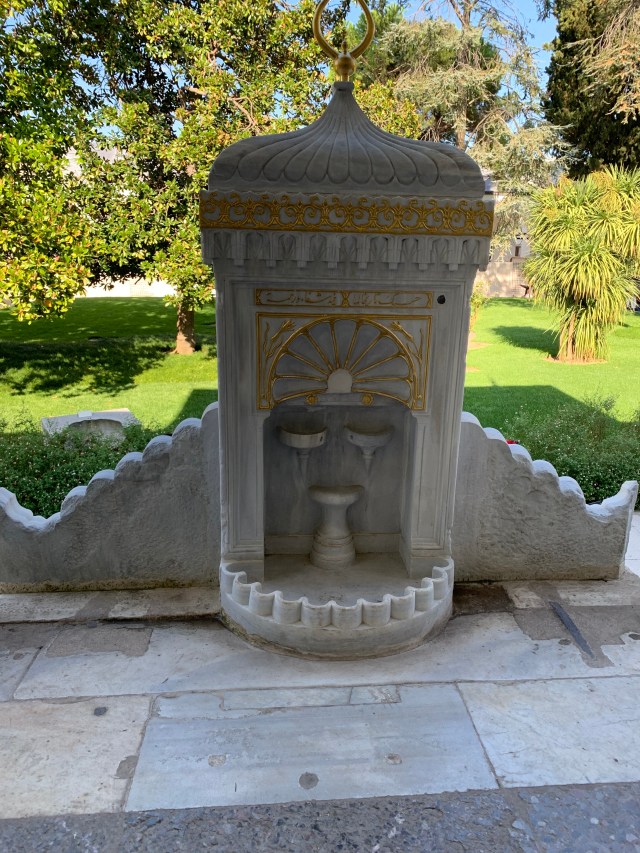
Fountain at Topkapi
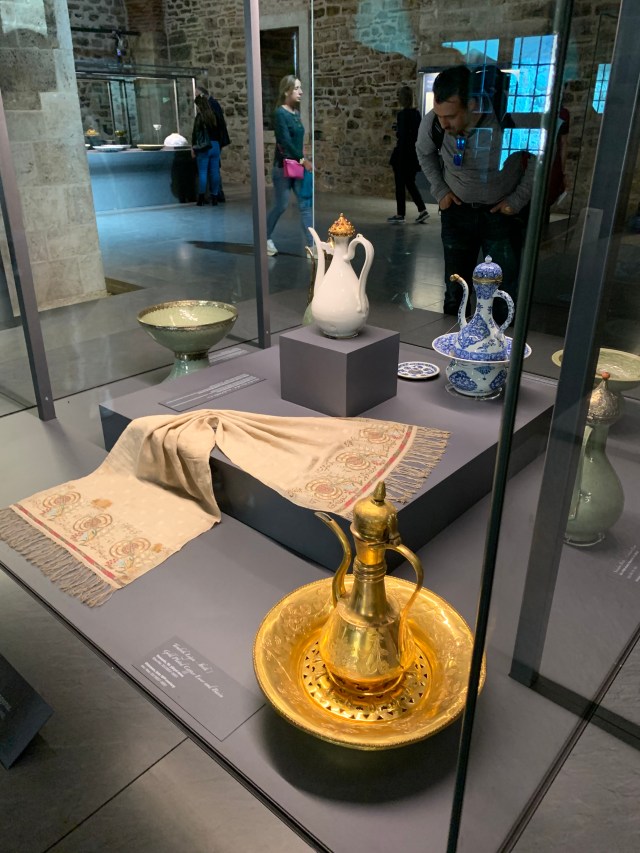
Kitchen artifacts from Topkapi
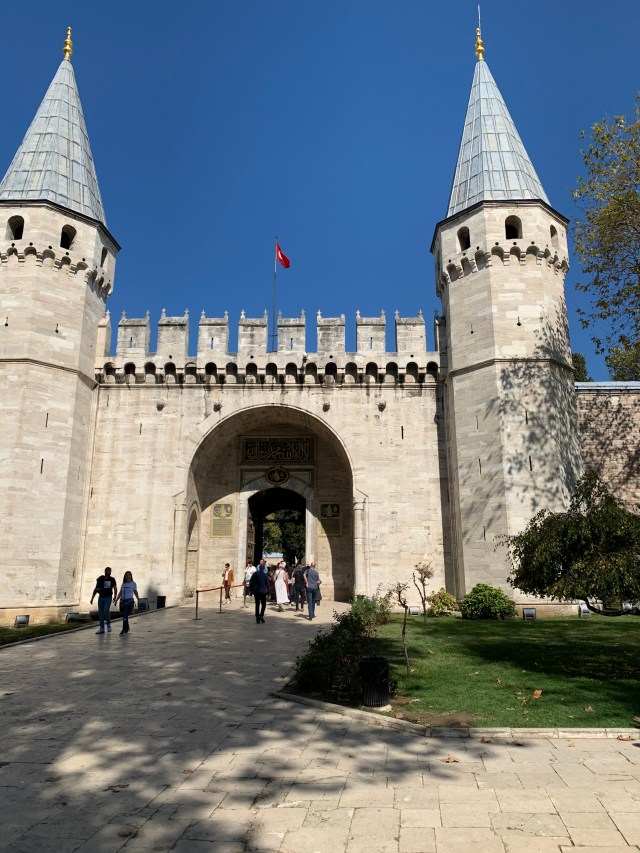
Entrance to Topkapi Palace
A great treasure discovered …
Thursday October 10, 2019
ISTANBUL, Turkey – Headlines in today’s Turkish newspapers showed the invasion of Syria on three fronts and photos of advancing forces. Unfortunately, I can’t read anything here and need to rely on American news coverage for the latest and updates.
In the streets of Istanbul, there are no visible signs of activity and people go about their daily lives with the usual gusto. People crowd into the Metro and trams and public squares near the Blue Mosque and Taxsim and filled with the usual amount.
On Thursday, we experienced Topkapi Palace, one of the great museums in the world. What makes this place unique are the buildings in this 130-acre complex. Each had a distinct purpose and function. Artifacts remain as a reminder of who lived here and what happened. As well, there are explanation panels which introduce the visitor to the function of each site and importance.
When Sultan Mehmet conquered Constantinople from the Christians in 1453, he ordered, in time, construction of Topkapi in 1478. He selected a location on a hill overlooking the Bosphorus and gradually, new pavilions and buildings were added by subsequently sultans. The complex became the seat of administrations for sultans for 380 years and a museum in 1924.
The grounds are divided into two sections. One functioned as the private residence of the sultan and the other housed the government, administration and services related to the palace. At any one time, there could have been between 5000 to 10,000 people living and working on the site.
The most two intriguing sections include the kitchen and the harem.
The first kitchen wing was constructed by Sultan Mehmed (1451-1481) and enlarged during the reign of Sultan Suleyman, the Magnificent (1520-1566). Both kitchen and cook’s quarters were destroyed during a fire in 1574 and rebuilt with a wider capacity.
One wing of the present complex is devoted to the kitchen, the foods which were cooked, preparation for the nobility, utensils, the importance of coffee and attractiveness of desserts.
Also compelling is the Harem, which was the living quarters of the sultans and their families. From its original construction in the 16th century to the early years of the 19th century, the facility had 300 rooms, nine bathrooms, two mosques, one hospital, one laundry room and several dormitories. To our great dismay, the Harem was closed because electronic sensors from which visitors entered did not function and the building was on lock-down by security officials.
Overall, the museum contains period furniture, religious artifacts, including what it claims to be the staff of Moses and placed a date of the 13th century B. C. on the item, splendid architecture, weapons and fashions.
We spend nearly four hours and came away with an appreciation that Topkapi is one of the world’s great treasures.
After 5 p.m. when we left, I finally flagged a vendor selling ears of corn. These guys are positioned in high traffic areas around the city and for 5t, we secured one cooked on a mini-grill next to the cart.
Approaching the T1 tram stop, we discovered a bakery and decided to have dessert before dinner. Once, I saw a catering truck on the New Jersey turnpike and a sign on a panel read, “life is short. Have dessert first.” Sounded good then and on Thursday. We ventured into Hafiz Mustfa, which began operation in 1864, and indulged in sheer decadence.
Waynette ordered rice pudding and I took a chocolate éclair, which was the best I’ve had outside of France. With a few cups of Turkish tea, that was enough to spoil our dinner but not a good late-night snack.
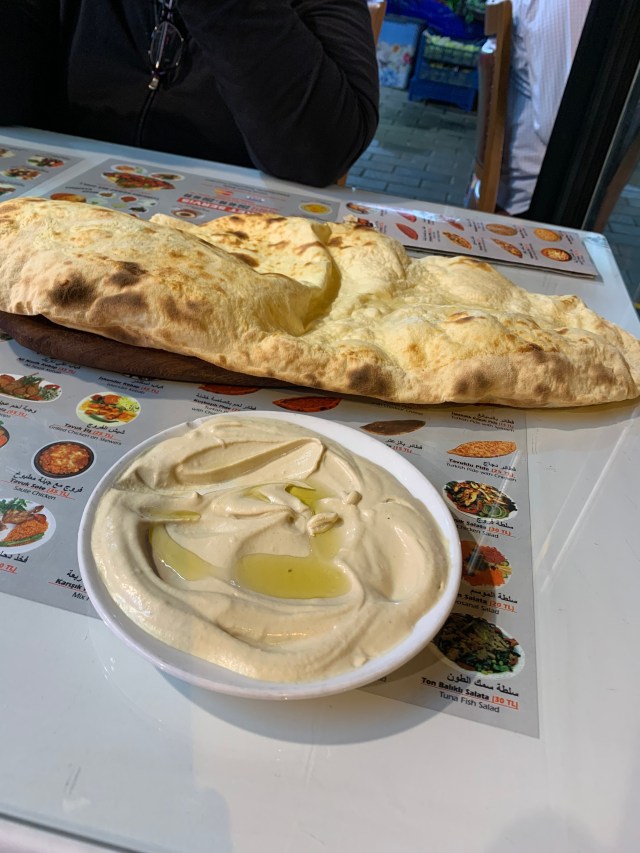
From here, we popped back on the T1 tram for a visit to Taxsim Square, considered an important meeting point. We found a few military statues to Turkish independence and a book fair lining a side street. After wandering about, we came across a restaurant which served “a kind of flat bread” which look quite interesting. We ordered that order and plate of hummus. Waynette took two eggs with that and I had a plate of rice and a beer. Not terribly healthy, we concluded, but fun and something new.
We then started back to the hotel and arrived around 11.
To obtain value from the museum passes we secured on Wednesday, we plan to hit a number of museums on Friday. In all, we can use our card in 14 museums around the city and have only used the card at Hagia Sophia and Topkapi Palace.
This was another physical day and we walked 6.5 miles, or about 14,500 steps.
PICTURES – Images from Topkapi Palace, the tea room in Hafiz Mustfa, our late-night snack
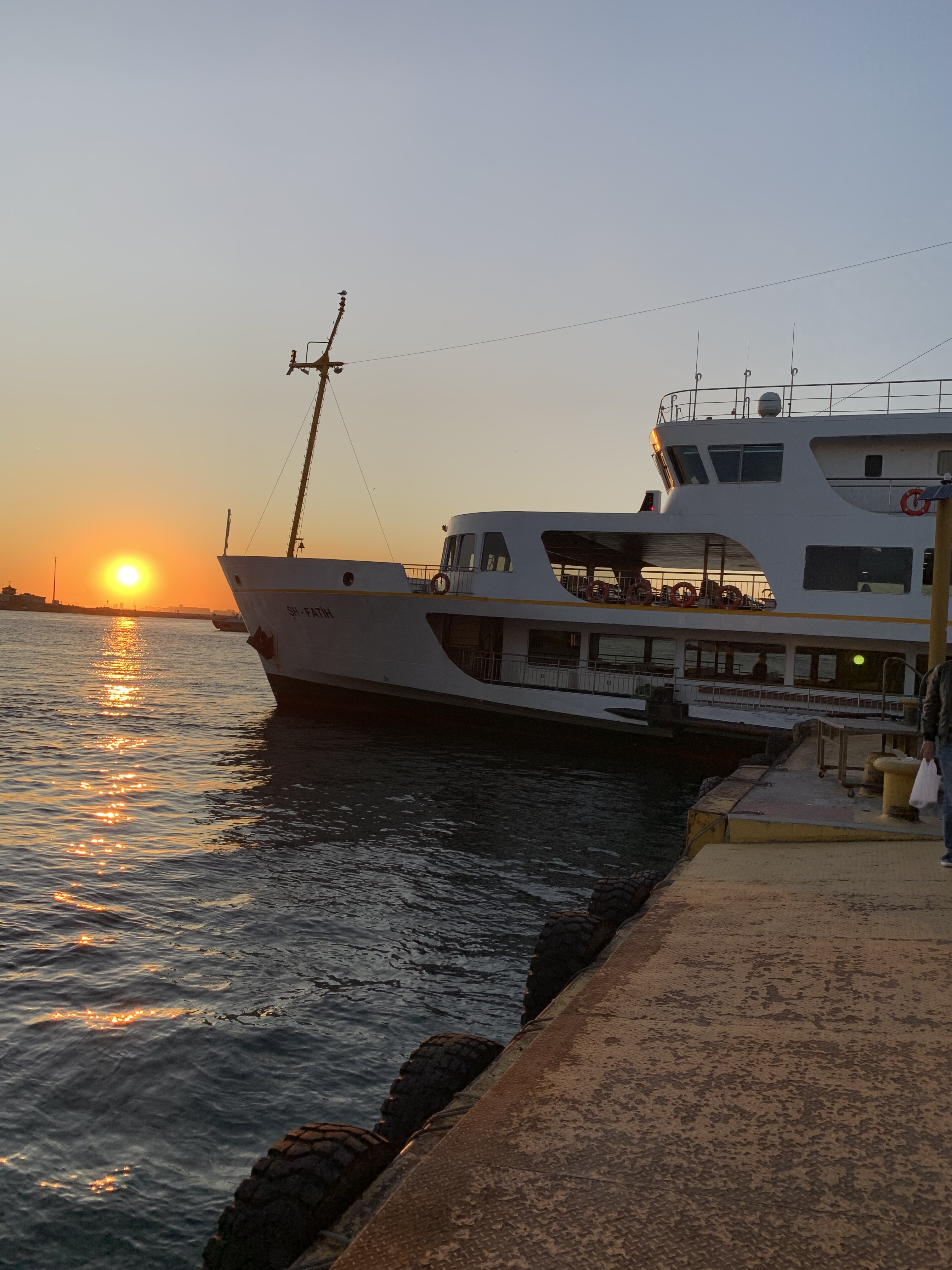
Taking the ferry at sunset across the Bosphorus
 markstravelblog2019