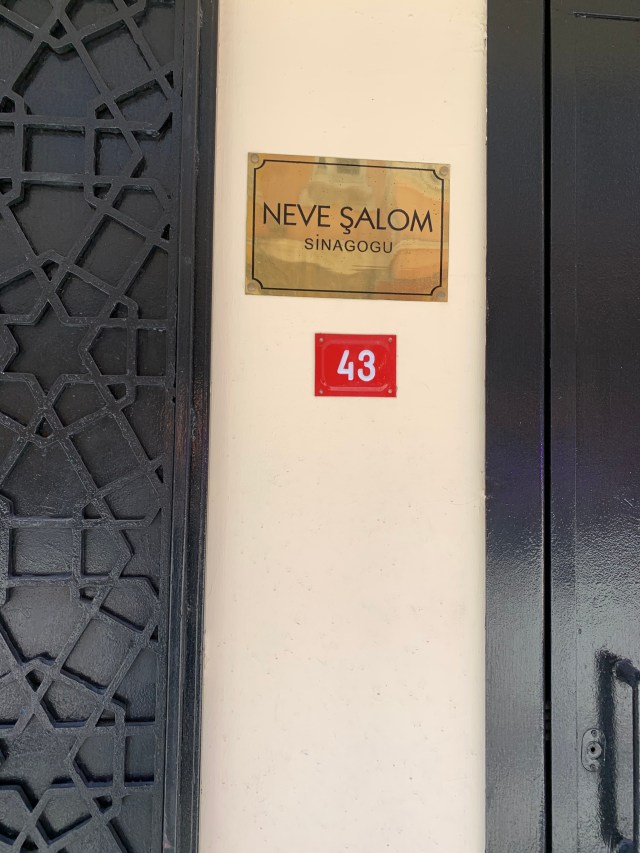
Exterior of the
Exterior of the
Wednesday October 9, 2019
ISTANBUL, Turkey – Today began in the most discerning way.
Because this day is Yom Kipper, the most significant day in the Jewish calendar, I wanted to maintain my personal tradition of attending services and observing the important tenets of the day. During our first day here, we found Neve Shalom synagogue, founded in 1459 and one of the oldest in Europe.
According to their web site, written in English, services for Yom Kipper begin at 10 a.m. and all are welcome. We left the hotel just before 9, caught the regional line and transferred to the Metro. That put us within a 10-mintue walk of the synagogue.
In the past, the synagogue was the target of right-wing activity and when we arrived, armed police were stationed across the small street. We approached and a man at the door said, “you can’t go in. Go,” he pointed to an unknown location down the street.
Explaining we’re American Jews who want to be responsible on this important day, he responded, “do you have a reservation?”
“No,” came my reply.
“Then, no.”
We stood outside for a few minutes and I mentioned to Waynette that perhaps a member of the congregation might come out and we can engage in a conversation.
In no time, another man approached and said, “you’re a problem and have to leave.”
“We would like to join the others and pray,” I said.
“Leave now,” he ordered.
Right then, I sensed a bit of anger from this guy and with armed police across the street, we thought it best we move. Disappointed and upset, it was hard for me to believe that anyone who wants to enter a house of worship be barred. It took a few hours for me to get over this and Waynette helped by pushing me along as a tourist.
Now, we pulled some maps and charted the day.
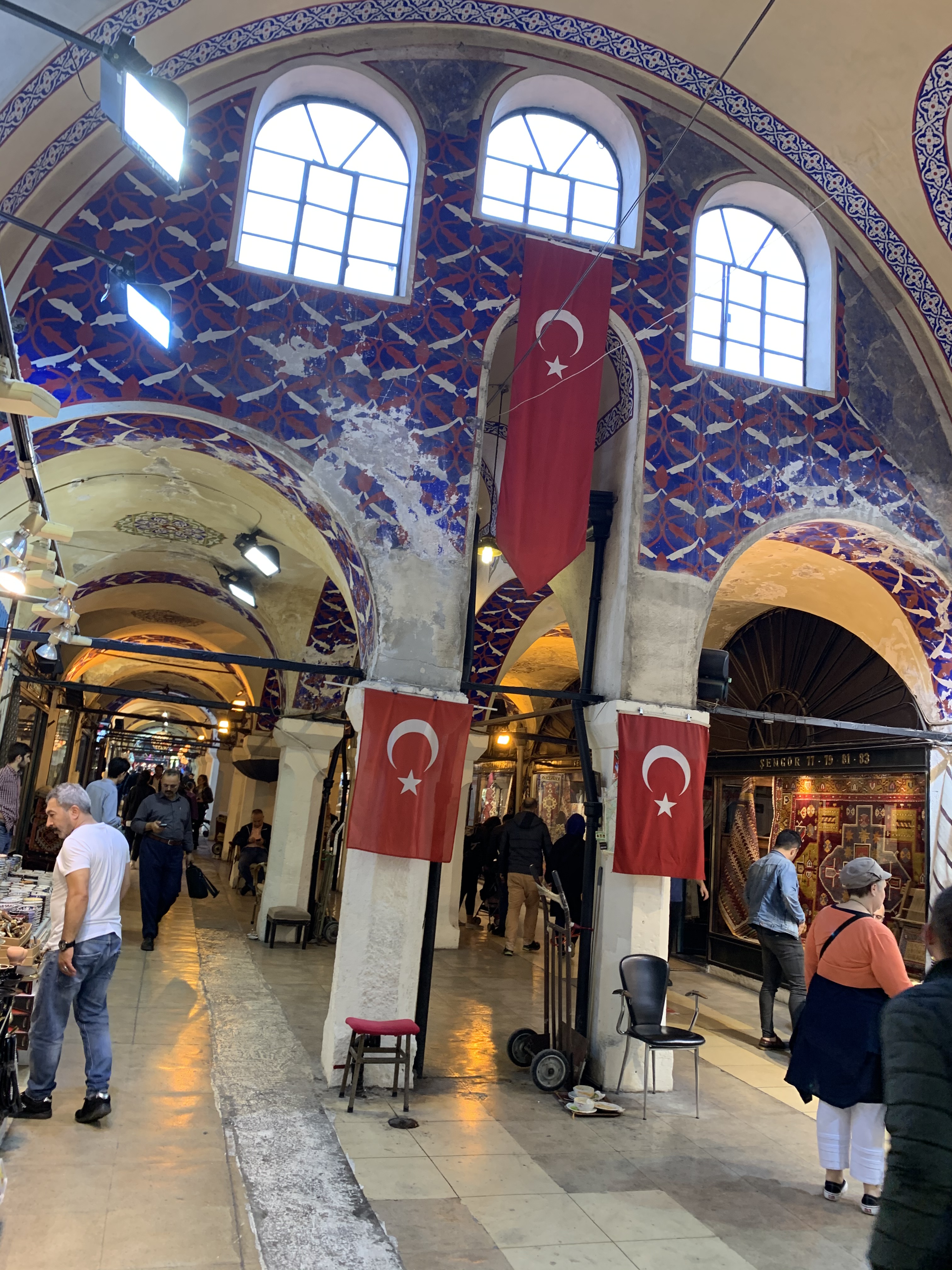
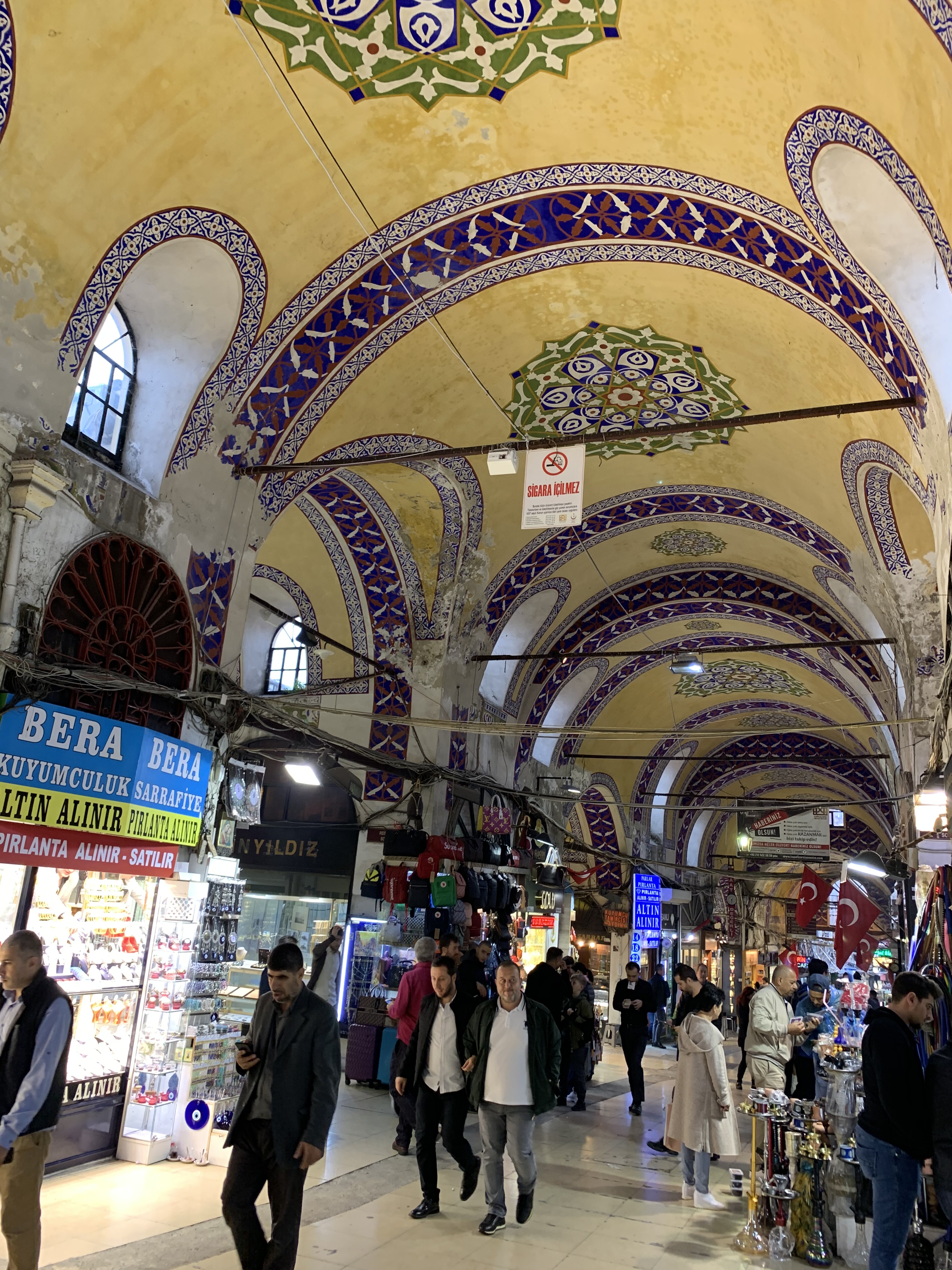
First, we walked over the Galata Bridge and disappeared into the Spice Market. That location is considered a must on a tourist’s map, and we discovered fruits, vegetables and spices dominating stalls throughout the surrounding streets.
By now, it’s about 12:30 and, and in the tradition of holiday, I took no drink or food. At this point, I turned to Waynette, and said, “I think my conscience is clean and I’m ready to move forward.” I said a few quiet prayers to myself and tried to do the best I could under the circumstances left behind at the synagogue.
At the crossroads of two alley streets, we came upon a small shop with a worker using a tool to create a square block. This looked like some kind of cake and we decided to try this unique Turkish dish. This is called Hatay Junefe, and I’ll post a picture. The cost was 12t or about $2.00 and we shared. It’s sprinkled with pistachio nut crumbs and very sweet.
Then, we started about the streets once again. This time, we took the T1 tram for a visit to the Blue Mosque, built by Sedefkar Mehmet Aga for the Sultan Ahmed I in the early 17th century. The name “Blue Mosque” was derived by travelers which saw a blue light reflected from cobalt tiles.
The building is under renovation and in need of upkeep. Upon entering the grounds, there is an impressive series of information panels, predominately in English, which outlines the basic canons of Islam, personal reasonability and notes similarities in its’ doctrine to Christianity and Judaism.
As in all Islamic places of worship, we removed our shoes and guided to a section roped off for visitors. There are also sections for those who wish to pray and includes both the main prayer floor for men and a separate section or women.
Ironically, the dichotomy of the day struck me as rather strange. Here, I was barred from attending services in a synagogue but ended up on the holiest day of the year in a mosque.
Go figure!
Across the courtyard from the Blue Mosque is another of Istanbul’s treasured landmarks. The Hagia Sophia was a church for nearly 1,000 years, a mosque for 600 years and now a museum. We bought an Istanbul museum pass for about $35 each and that’s good in 14 museums around the city.
First, we entered the Hagia Sophia, which is the third structure on the site. The First Great Church was constructed by Emperor Constantuis in 360. During the reign of Emperor Arcadios (365-408) in 404, the building was set on fire. Then in 532, the Emperor Justinian razed the structure previously destroyed in another riot and constructed the present Hagia Sophia, or holy wisdom. In 1453, the Ottoman sultan Mehmed II converted the building into a mosque and later became a museum in the mid-20th century.
Today, most of the building remains in need to repair and painting. Some painting restoration began and from a quick glance, this could take decades to complete.
In the upper level, or gallery, two frescos remain from the days of Christianity. One is 12th mosaic panel depicting the virgin Mary as the centerpiece and the other dates to the 11th century and shows Christ on the throne as the dominant figure.
We closed Hagia Sophia at 5 p.m. and caught a ferry to the Katikoy section of Istanbul. This is on the Asian side and filled with a sparkling nightlife. Walking up from the Bosphorus, we caught a dessert shop and engaged with a woman sitting there with a chocolate dessert. She said was from Canada and recommended a pasta place around the corner. We took her up on that and came away with a great surprise.
Turns out this is a pasta bar where you slide your tray and ask for different kinds of pasta. We thought this was a rather unique idea. We each ordered three different kinds of pasta and shared a salad. This was a great relief from the daily dose of kababs and fries, and we agreed that this place is worth a second visit.
After dinner and ice cream, we headed back to the hotel. This turned into a physically demanding day and we walked 8.5 miles or about 18,000 steps.
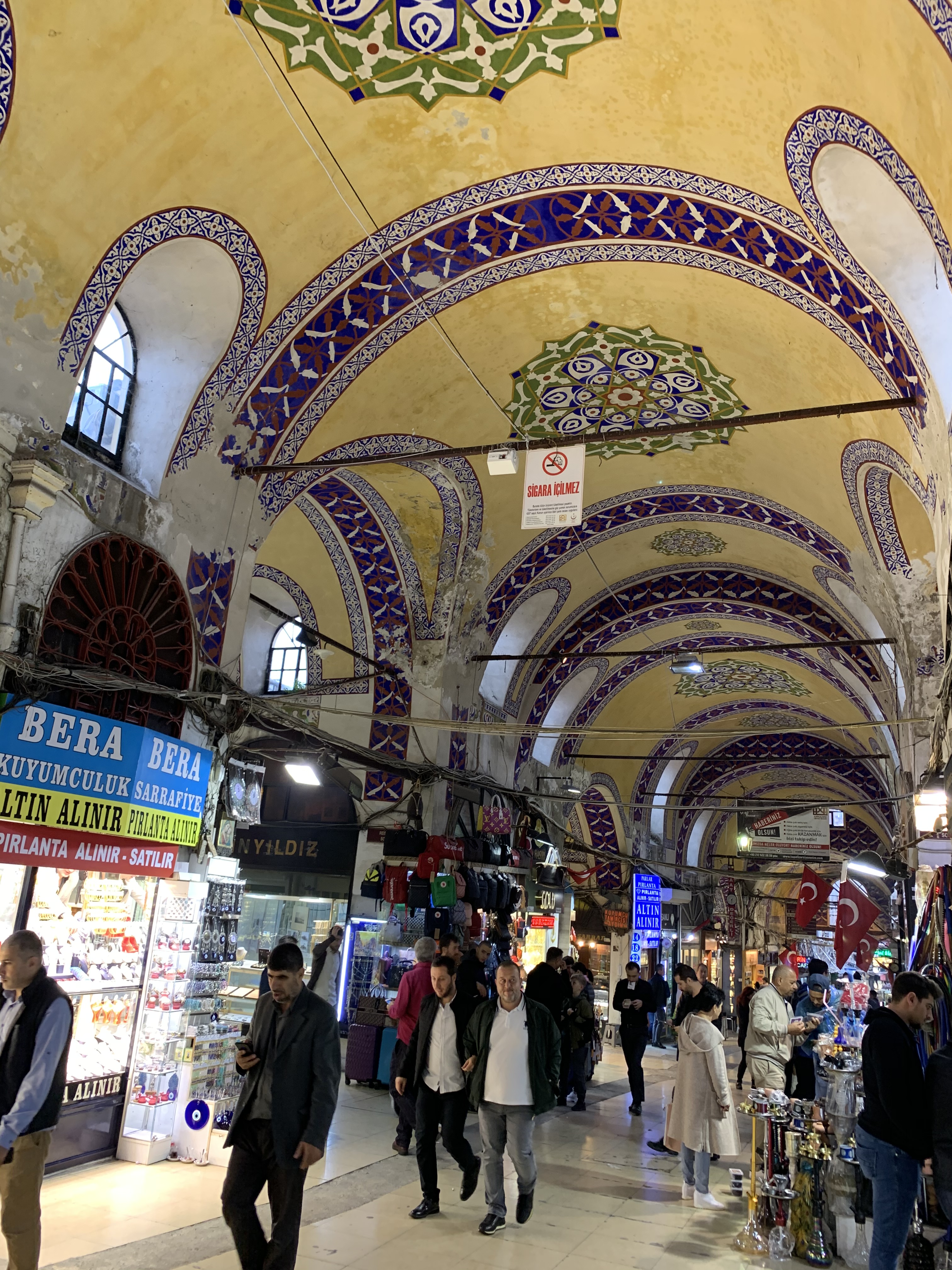
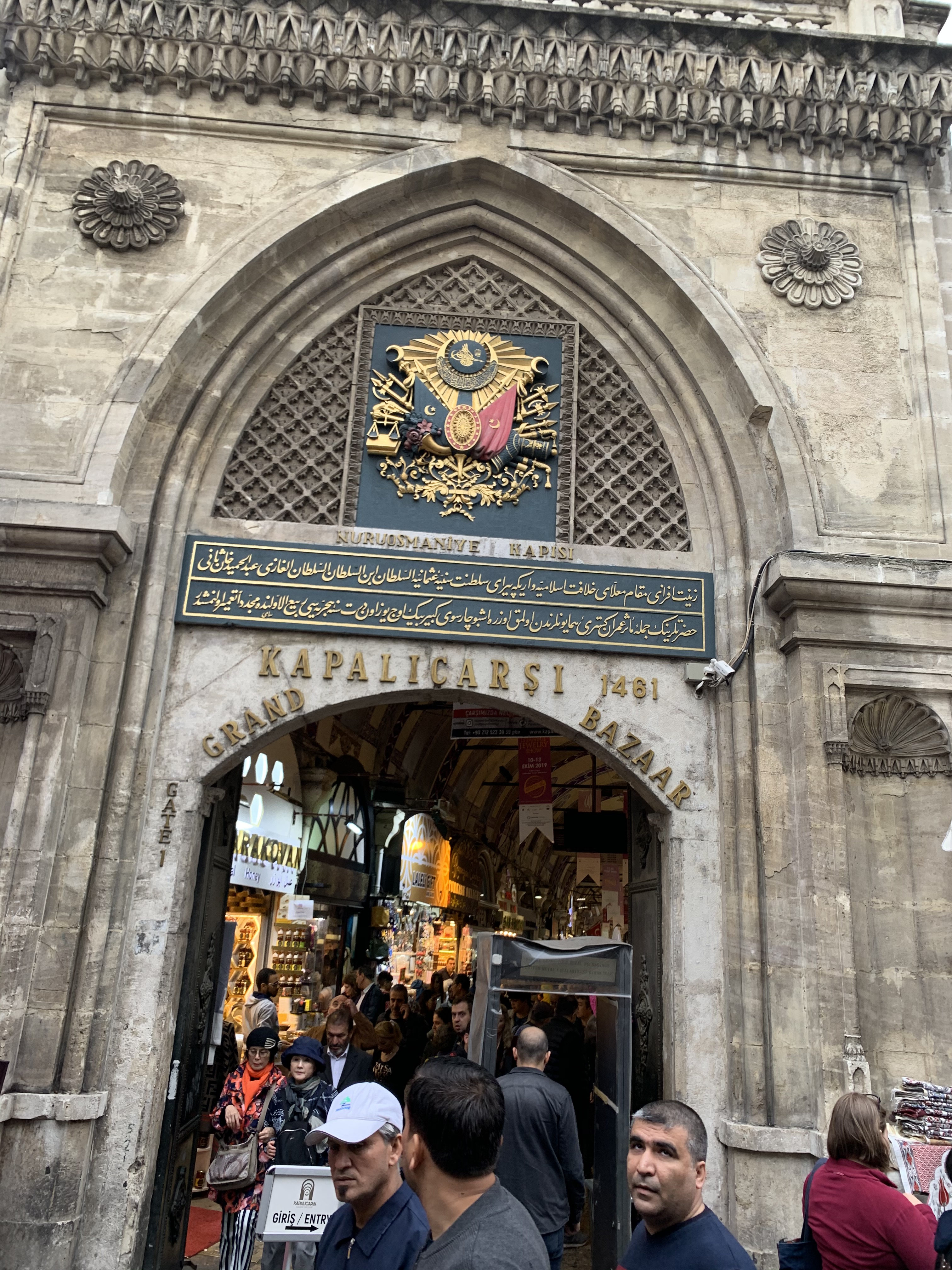
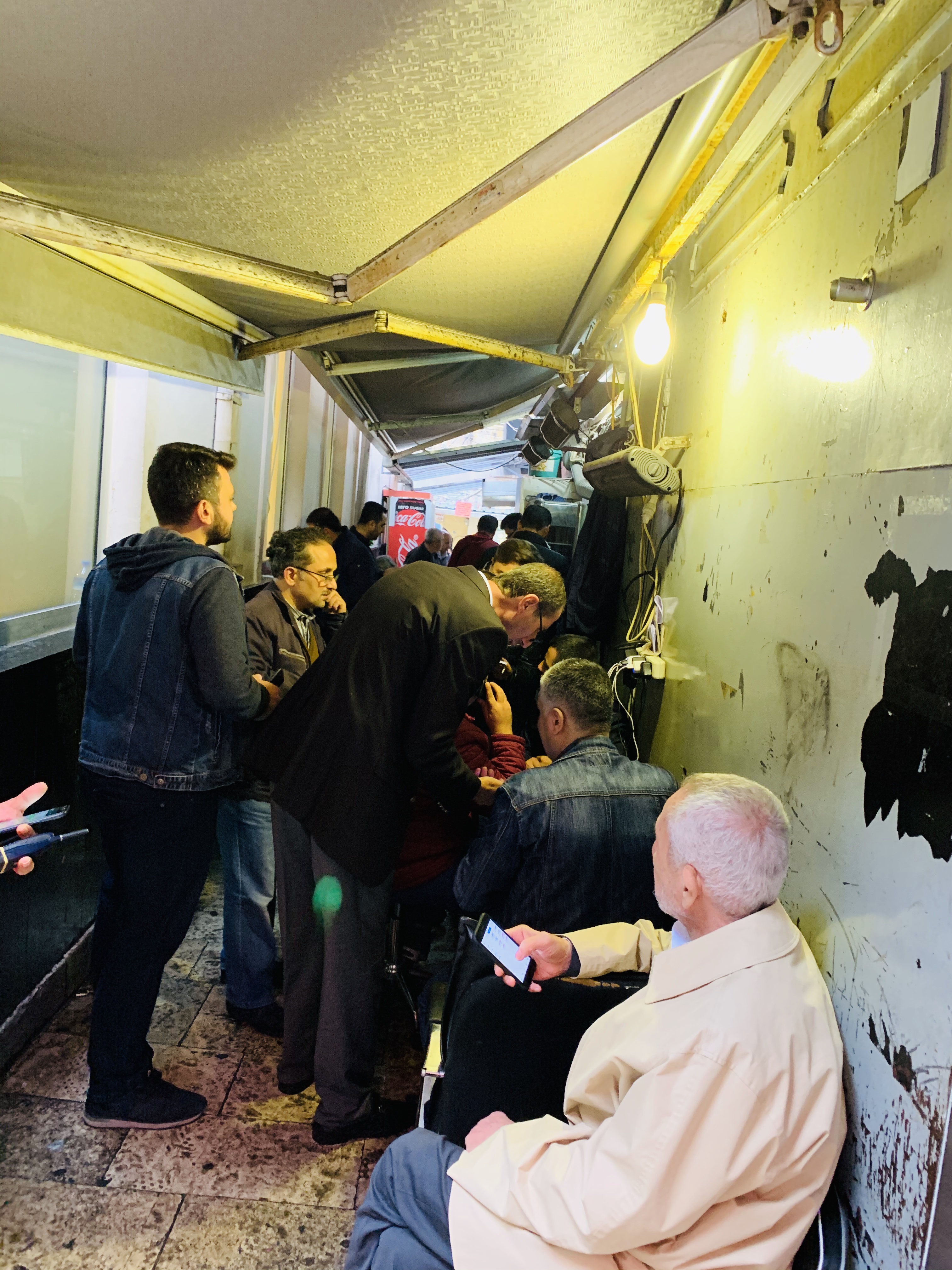
PICTURES – exterior of the Neve Shalom synagogue, images from the Spice Market, the Blue Mosque and Hagia Sophia



 markstravelblog2019