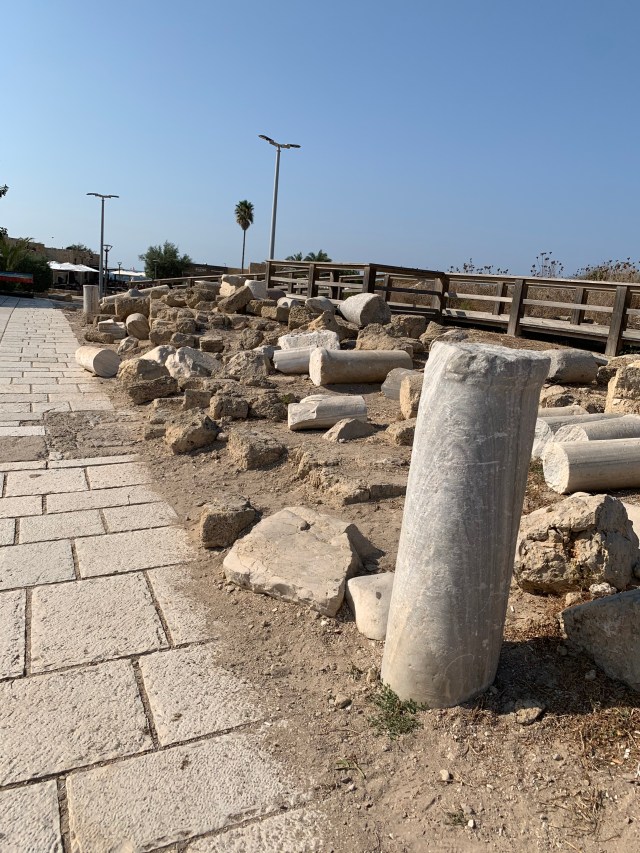
Roman columns on site
Roman columns on site
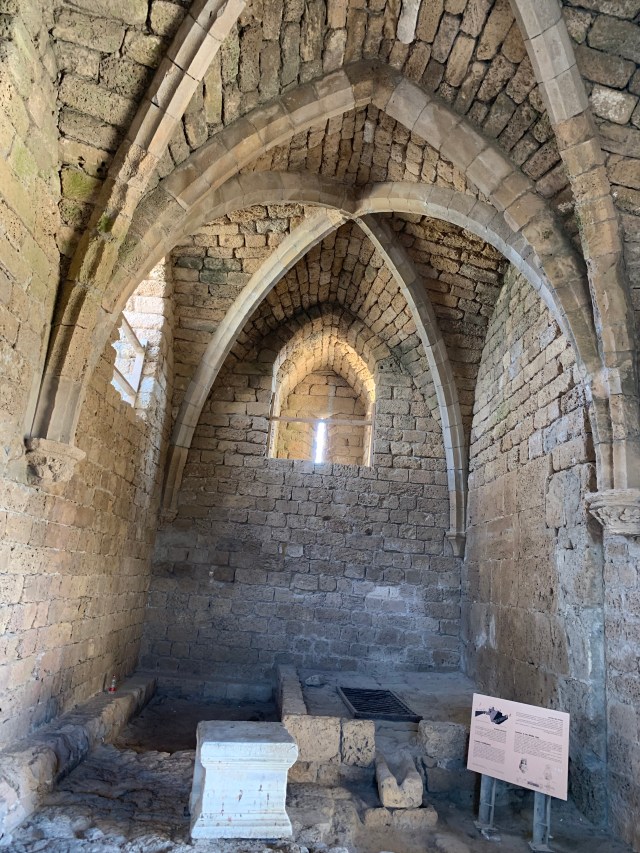
Entrance to Caesarea
Sunday October 27, 2019
JERUSALEM, Israel – With all intentions of leaving the house this morning in a reasonable hour, we were detoured by a few logistical issues. First, we finalized details on our flight this Wednesday night from Tel Aviv to Athens.
Then, Joseph, the one who first opened the property for us and gave us the key, stopped over with a few things. We were able to have serious questions answered, and these included operation of the washing machine and dryer on the property, operating the microwave, and how to shut down the daily noise from the nearby mosque and the daily call to prayers at 5 a.m.
Finally, we were out the door and headed up the west coast. Our destination was Caesarea, an archaeological site from Roman Judea.
Surveying the map, Israel is a living museum of Biblical stories and locations. Just in the Mount Olive area, in East Jerusalem, there are numerous churches as well as the Jewish cemetery that dates back 3,000 years. Though this area is on our bucket list, it seems less than probable we’ll get there.
Also, two other sites on the radar screen, King David’s tomb and the grave of Oskar Schindler, also on the radar screen, will be a stretch to see during the remaining two days here.
On Sunday, we did travel to Caesara and revisited Herod, the same guy who built a palatial retreat in the mountains of Masada.
Caesara, located north of Tel Aviv and along Israel’s west coast, was a planned city and featured a network of criss-crossing streets, theatre, amphitheater, markets and residences.
With Roman occupation, Herod, who ruled Judea between 37 BC and 4 BC, was awarded the site. To honor Caesar who bestowed the land, Herod set about to construct a port city which would bring goods and glory from the known world and allow for growth.
Construction took 12 years and great ceremonies were held in 10 BC and 9 BC to commemorative completion. While Caesarea developed as an important transit for goods from Italy and the known world, that period represented the first of two significant eras in its history.
Later in the 12th century, the city was conquered during he Crusades and during the Crusaders of king Louis IX of France in 1251, the city was fortified anew.
After conquest by the Mamelukes in 1265, Caesarea lay dormant for centuries. By the late 19th century, interest developed and in 1879, a survey of the Palestine Exploration Fund established the first extensive scientific exploration of he region. Discoveries included columns, pillars, statues and inscriptions and elements of everyday Roman life. Since 1992, excavations are conducted by teams from the Antiquities Authority and Haifa University.
While not much remains from original structures, the theater is here and, unlike other ovals constructed by the Romans, the one at Caesarea remains fairly in tact. While spectators marveled at the chariot races, a stone centerpiece was constructed to add difficulty to chariot drivers trying to make hair-pin turns, and remain on site. The theater is positioned along the Mediterranean Sea and one can only imagine a few riders and horses which did not make the turn and ended in the water.
Once we parked the car and headed for the entrance, Waynette spotted a juice bar outside the ticket window. Since her favorite is a combination of orange and pomegranate, she approached the vendor and asked for the drink. I stepped aside and waited for the purchase. Easing my way back, I saw she walked away without the drink.
“What a thief,” she proclaimed. “The guy charged me 35 sheqels and that’s about $10. No way, 10 bucks for a juice. You have to be kidding.”
“I guess he took one look, saw you had ‘tourist’ written on your forehead, and jacked up the price,” was my response.
At that point, we began walking toward the entrance and heard the vendor scream, “hello, hello,” and we kept walking.
Throughout our visit, Waynette continually referenced the price of the juice, and concluded, “even Starbucks, which is outrageous, doesn’t come anywhere close near that guy.”
On site, other structures remain include the Roman baths, two aqueducts, the synagogue, the fortified medieval wall, a bathhouse complex, a market place and administrative center.
From the main entrance, the majority of remains move to the left and after exploration, we then walked to the right. Here, we found the synagogue and sat down in an open area for a rest. With just the two of us, a setting sun and the water lapping behind, the setting was idyllic.
Until …
A group of 40 or so descended upon the three rows, settled on either side of us and woman, perhaps in her mid-50s, began to address the group in Hebrew. Quickly, people sitting around pulled out their notebooks and began writing. I caught a few words of Hebrew and turned to Waynette.
“I think this is a training class to be tour guides,” I whispered as not to disturb the speaker, After about 15 or 20 minutes, the group gathered their notebooks and exited. One guy, wearing a red Columbia tee-shirt, approached us.
“Where are you from,” he asked in English.
“Arizona,” I said, “and wasn’t this some kind of tour guide class?”
“Yes, he replied, “We’re training to be tour guides in Israel. I lived in Arizona for seven years before coming back here.”
The guy mentioned trips to Las Vegas and frequent summer dust storms. The conversation was not terribly long and he quickly rejoined his fellow students.
By this time, the sun was setting over the Mediterranean and we settled for a strange combo. A restaurant next to the water promoted pizza and ice cream, and so we engaged. After we polished off a Margarita and a bottle of Coke Zero, the second half was spectacular. The ice cream promotion was huge. Waynette selected three giant scoops of passion fruit, vanilla and cookies/cream and we were in dessert heaven.
Originally, we wanted to drive further north to the Sea of Galilee but, by this time, it was nearly dark and we rationalized we could not see any sights. With that conclusion, we stared back to Jerusalem. Through Tel Aviv, we hit a major traffic jam and the drive back took two hours.
For Monday, we’re getting an early start because we want to see the Temple Mount. Because we are not Muslim, we cannot go inside the Dome of the Rock but can walk the grounds. From there, we plan to visit the Israel Museum and then finish Yad Vashem on Tuesday.
STEPS – At Caresrea, we did nearly 9,000 steps and that’s four miles.
Friday October 25, 2019
Saturday October 26, 2019
JERUSALEM, Israel – On Friday, we did not leave the house and took the day to recover. Still feeling the effects of walking 13 miles in Petra and Waynette also achy, we allowed time to recover, give our bodies a chance to heal and recover.
For Saturday, we took a day trip to Masada, about 130 kilometers southeast of here and adjacent to the Dead Sea. The drive took about 90 minutes and parking was free. Located on the eastern fringe of the Judean desert, Masada is a mountain block and rises 450 meters, or 1,500 feet, above sea level.
At its core, Masada was a fortress built by Herod, the Roman king of Judea. A series of structures was constructed in the form of a Roman royal residence and considered a palatial retreat built for personal benefit and protection.
The area included storerooms, a cistern system, Roman bath facilitates, private residence and public reception areas.
Ruling from 37 BC to 4 BC, Herod was aware of Masada’s strategic importance and access quick to the Dead Sea. After his death in 4 BC, the Romans annexed Judea and a garrison was established on site.
Within the next 50 years, the Romans conquered Judea, destroyed the second temple in 70 AD and sought destruction of the Jewish people. That forced the Jews to flee Jerusalem and seek out Masada. The last fortress of Jewish resistance, Masada became an amalgam of various Jewish groups whose sole aim was to gather an army and defeat the Romans. Labeled as the Great Revolt, the leader of the Rebels, so identified by historians, was Eleazar ben Yair, who took overall command.
In their attempt to finalize the conquest of Judea, the Romans dispatched a legion of 8,000 soldiers to the foothills of Masada and began the siege. The Roman camps, fortification, and assault ramps are considered the most complete surviving Roman siege system in the world.
In total, the Romans established eight base camps around the circumference of Masada and began their assault in 73 or 74 AD. Led by Flavius Silva, the 10th Legion used the apparatus of earth and wooden supports on a natural slope to the west to commence their operation.
After a few months, the Romans built a tower with a battering ram and began to destroy rock and rock formations. Slowly, the Romans advanced and made the situation of the 960 Rebels hopeless.
Here, ben Yair gave two speeches and explained that taking their own lives was a better fate than to surrender to Rome and their plans for slavery.
All died except for two woman and five children who hid in the cisterns. The final siege was completed on the 15th day of the Jewish month of Nissan, the first day of Passover.
The site is important to the Jewish people because of the sacrifice and martyrdom of nearly 1,000 people. Masada, itself, was largely lost to history until the mid-19th century but not until 100 years later did the true excavation commence. Under the direction of Dr. Yigel Yadin of The Hebrew University in Jerusalem, findings included well-preserved artifacts from both the Rebels and the Romans.
On site is an impressive museum with several hundred items, including vases, personal items, weapons, writings and even a pay slip given to a Roman officer.
Remaining on the site is Herod’s original structures, including the Western Palace, the baths, storage areas, the cisterns and, when the Jews arrived, the synagogue and study area.
The site can be reached by walking from the visitors center on the snake trail and the time here is about 45 minutes. Having just walked the 800 steps at Petra to the Monastery, I simply said, “thanks, but no thanks” and took the 80 passenger funicular.
Overall, we spent about three hours touring the site and that was enough time to digest the events and understand the significance in Jewish history.
After Masada, we returned back to the apartment and reached the property owner. When we left in the morning, the internet was down and Omar, the husband of the woman in which we have communicated, came over. He speaks perfect English with no accent and I asked if he was from the United States. He told us his mother was born in Oregon, his father from Palestine and his parents met while students in California.
In no time, we engaged in a fascinating conversation about Israel and the neighboring Arab states. Not to change the subject, Omar said he would give us the names of some restaurants and dinner time was upon us.
Though we did not know, the Palestinian territories go back to Standard Time Friday night over Saturday and Israel is scheduled to change Saturday night over Sunday.
STEPS – 5,300 steps at Masada and about three miles. The weather was overcast and temps in the low 70s.
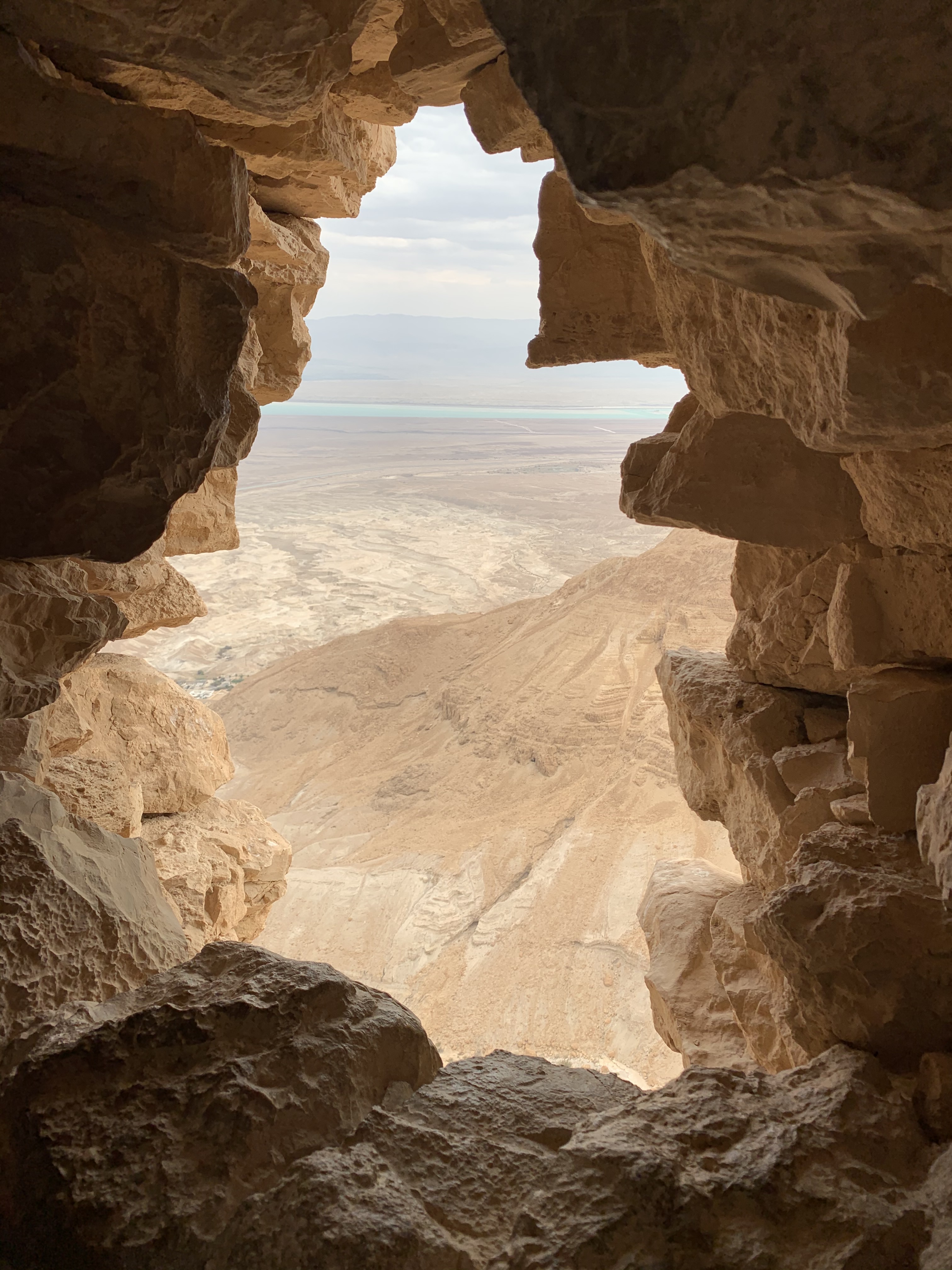
From the inside
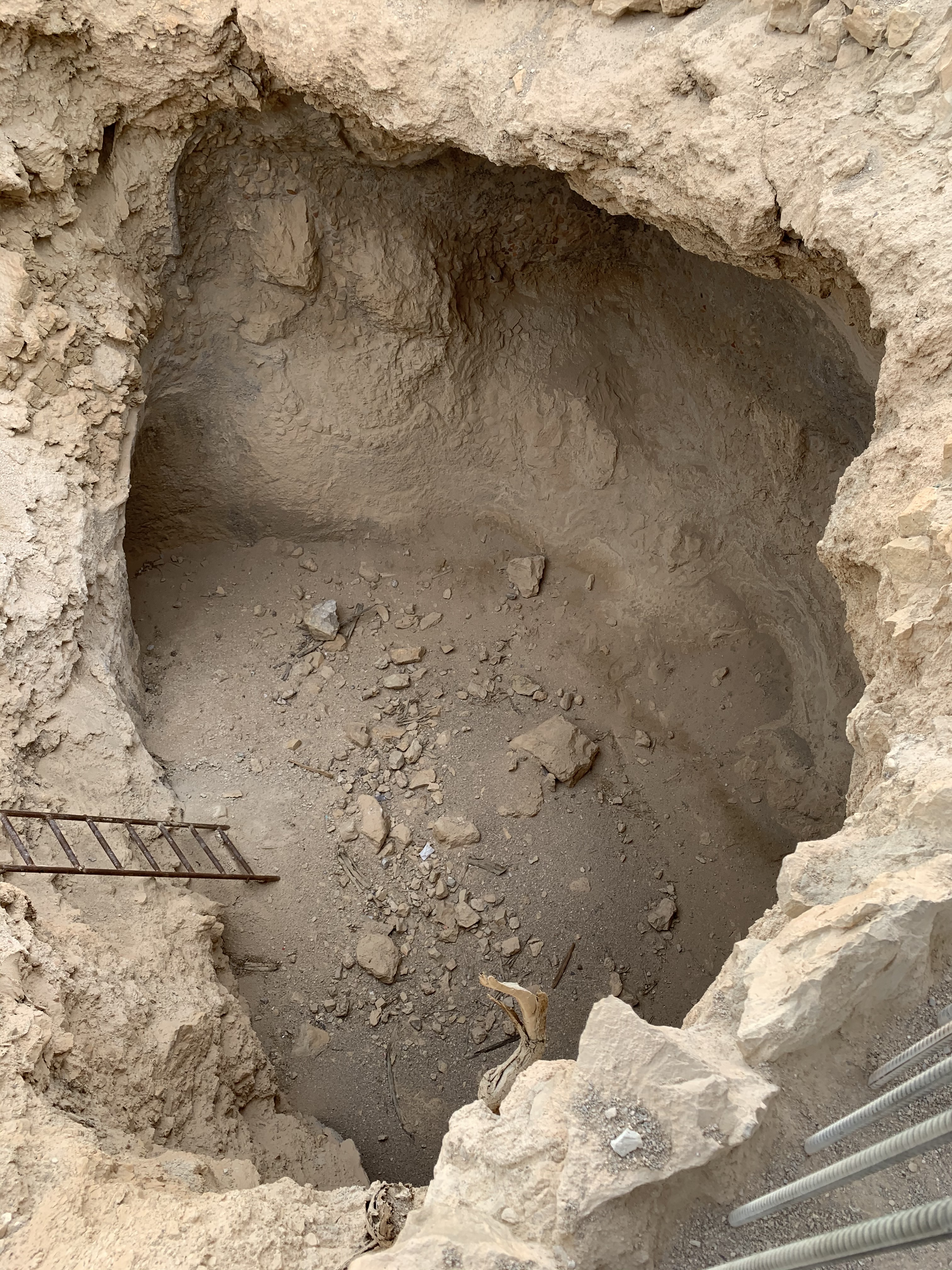
Cistern
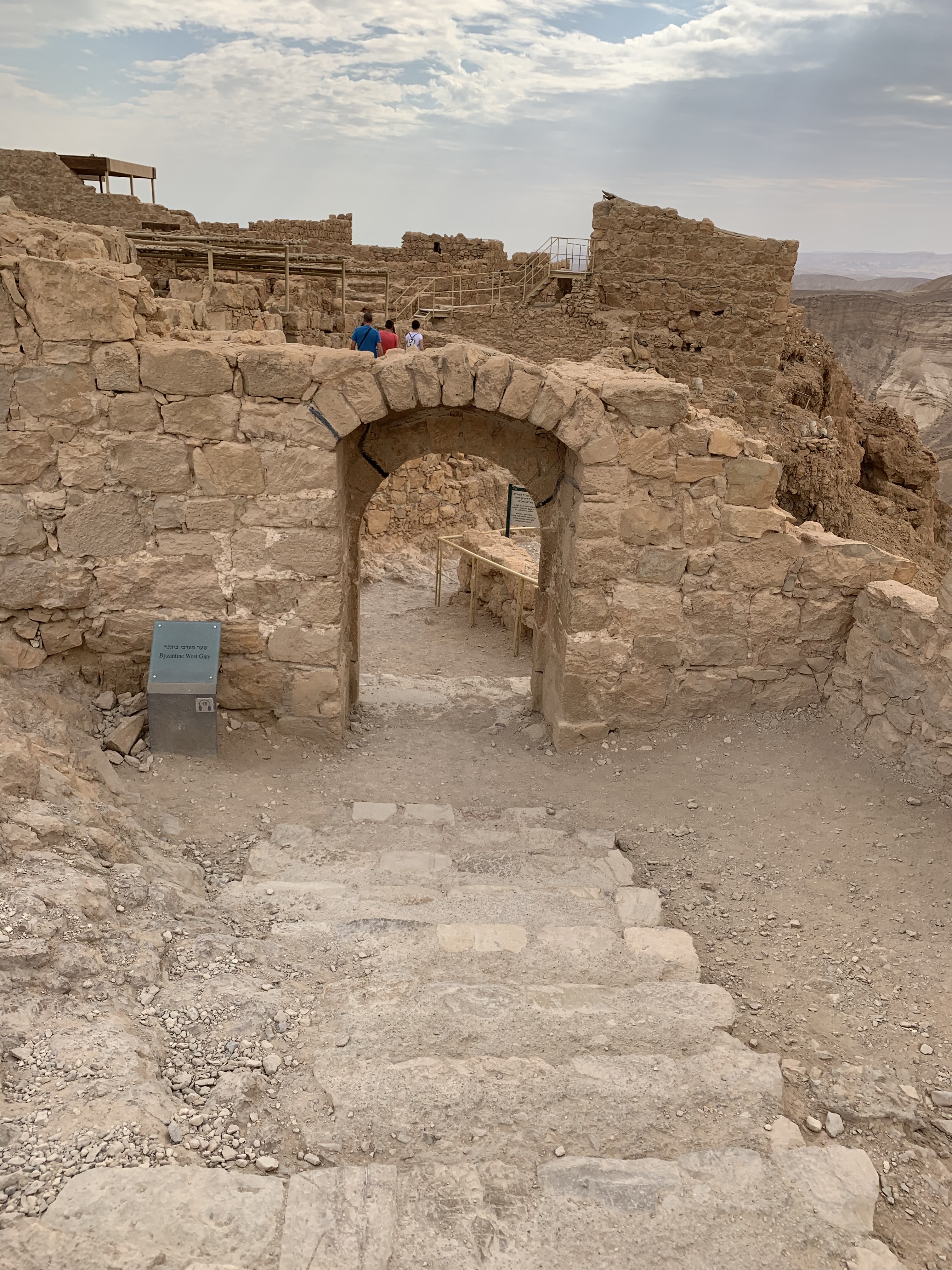
Byzantine Gate
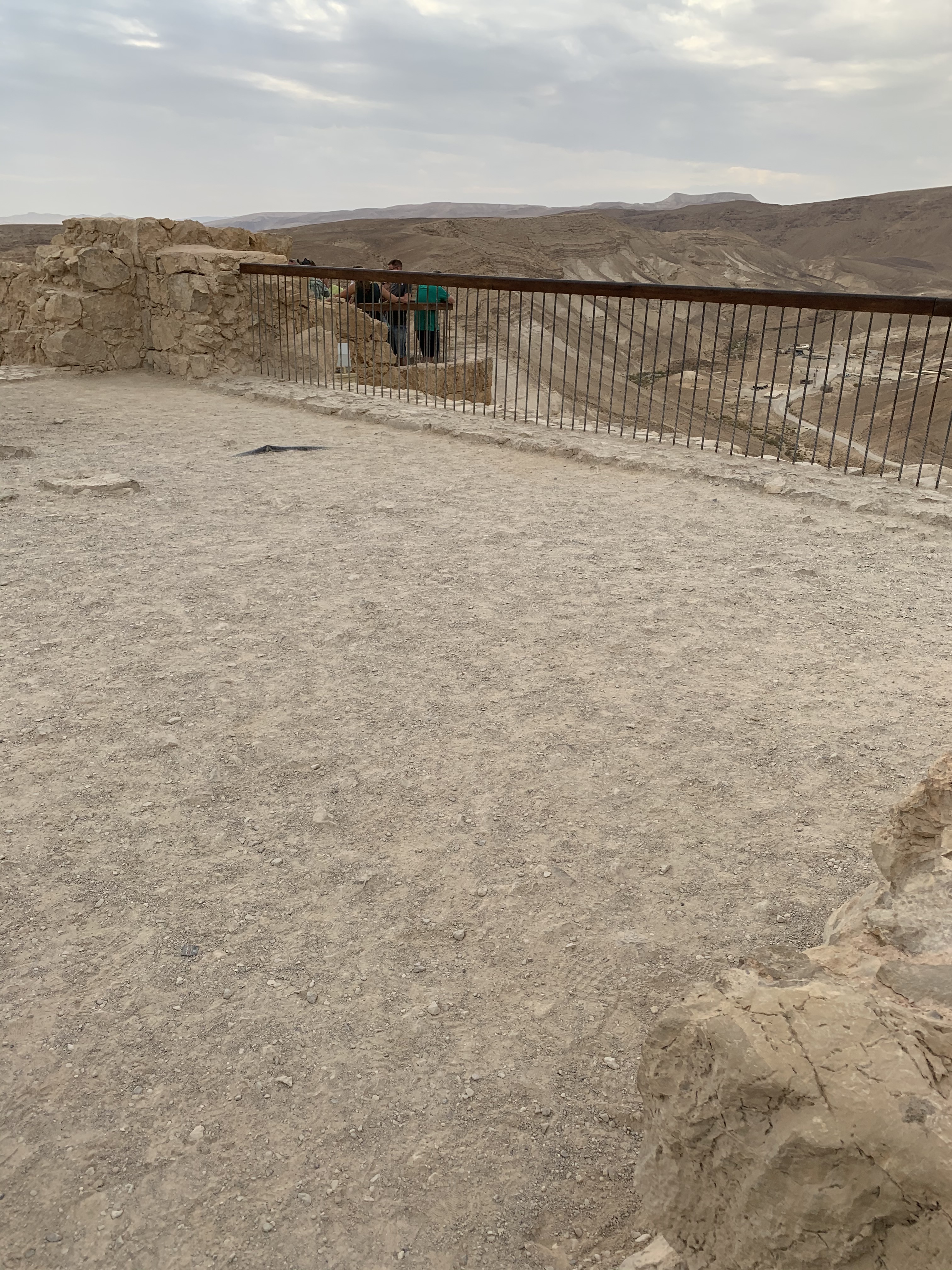
Site of the siege behind The Rebels
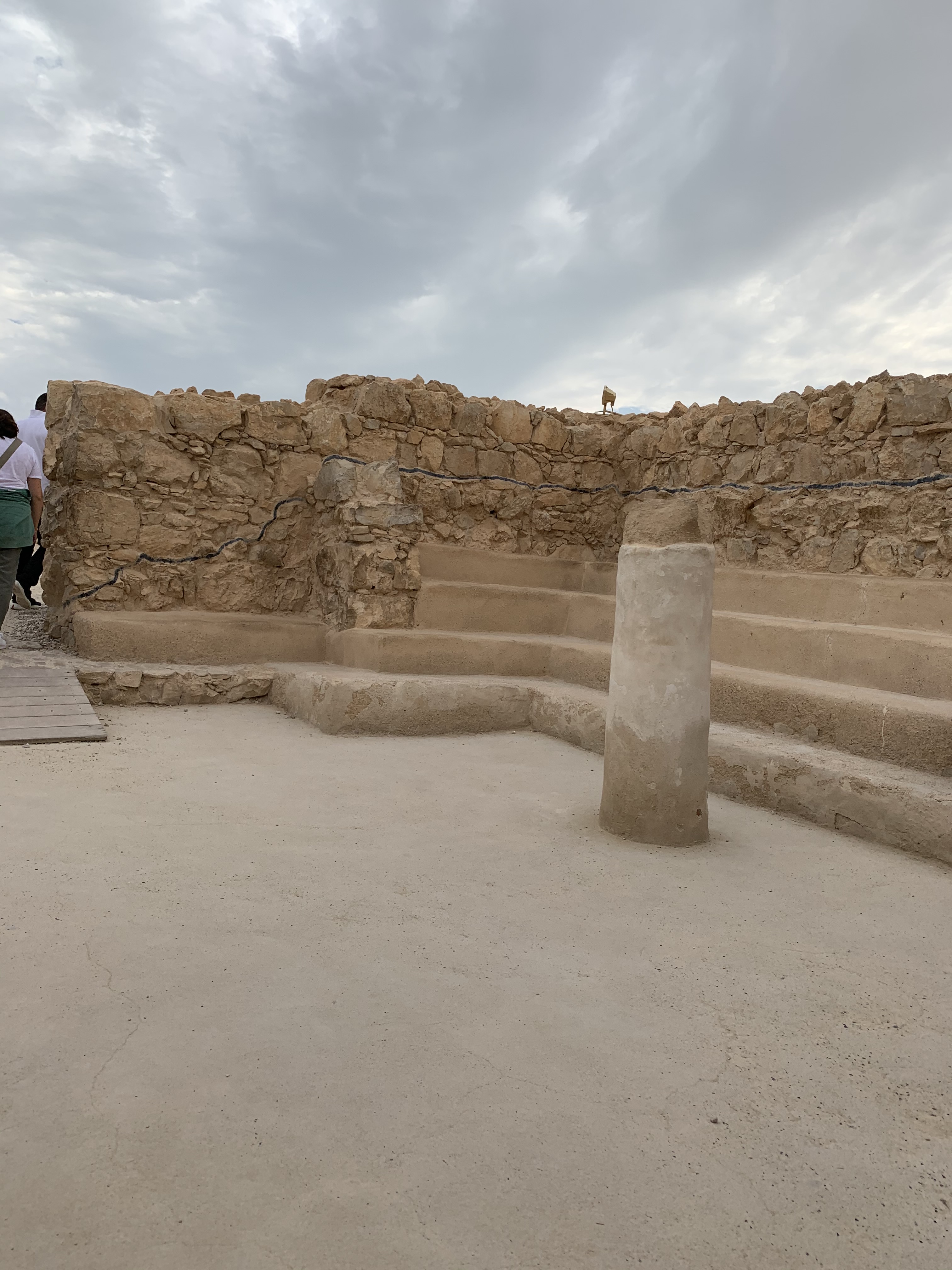
The synagogue
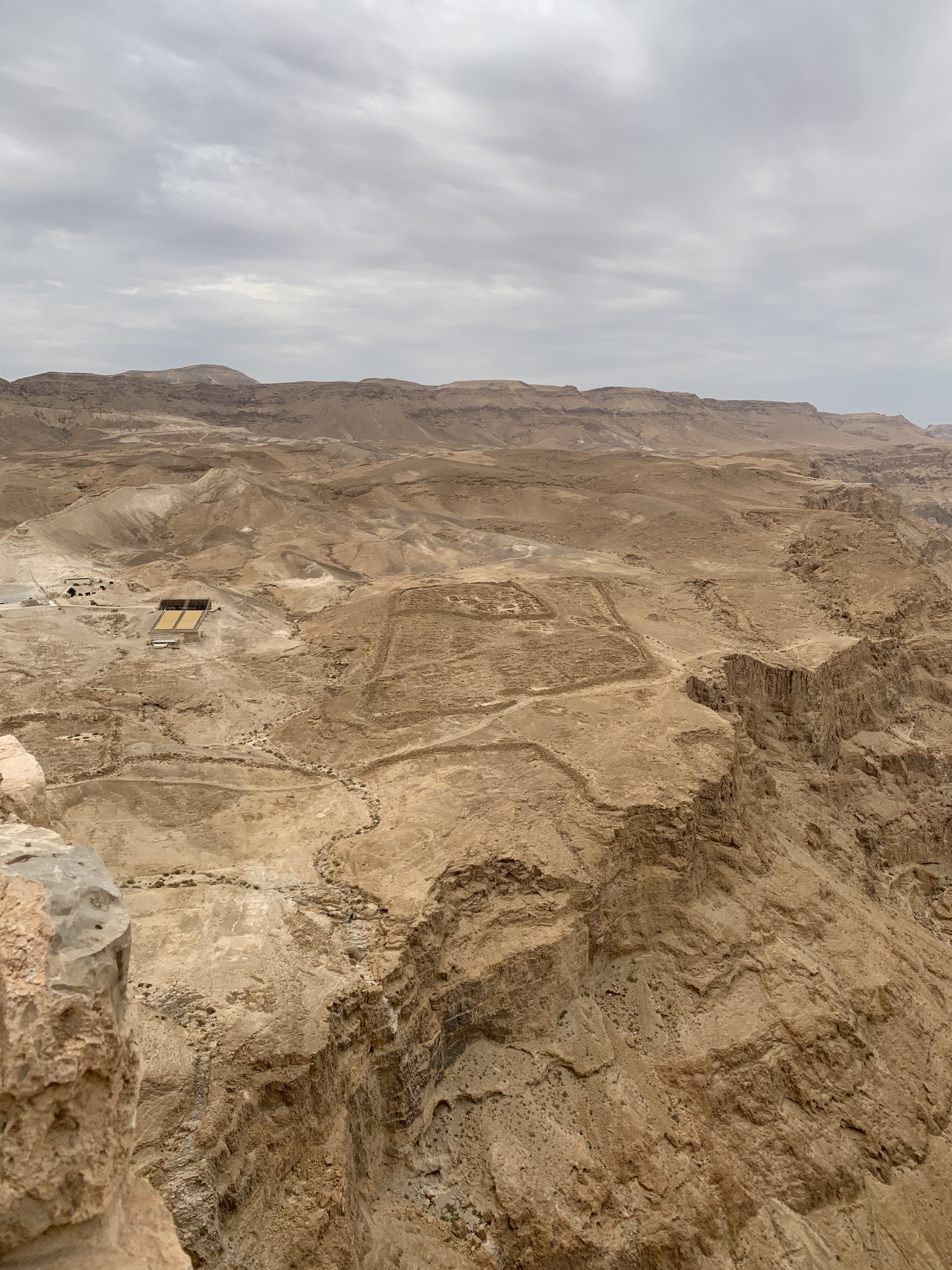
The “square” is one of the eight camps of Roman soldiers

 markstravelblog2019